PSU for GPU wattage, from each card maker’s own spec page

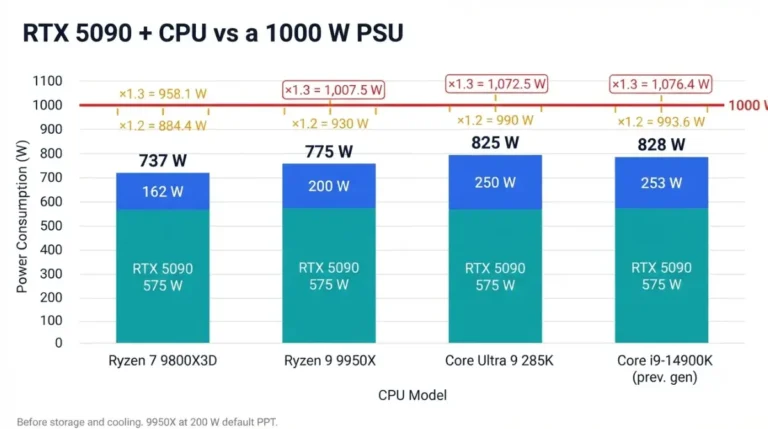
PSU wattage for eight current GPUs, each from its maker’s own guide or spec page. NVIDIA based the RTX 5090’s 1000 W on a PC with a Ryzen 9 9950X.

 ByRenuka Komre
Last Updated:
PSU wattage for eight current GPUs, each from its maker’s own guide or spec page. NVIDIA based the RTX 5090’s 1000 W on a PC with a Ryzen 9 9950X.
 ByRenuka Komre
Last Updated:
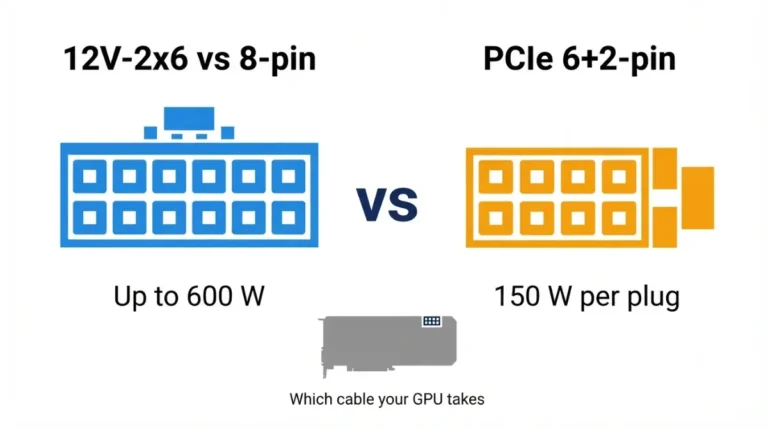
12V-2×6 or 8-pin on an RTX 5080? It takes one 450 W or greater 12V-2×6 cable, or three separate PCIe 8-pin cables through its adapter.
 ByRenuka Komre
Last Updated:
PSU for GPU figures differ by board: ASUS bases its 1000 W ROG Astral RTX 5090 figure on a fully overclocked GPU and CPU system.
 ByRenuka Komre
Last Updated:
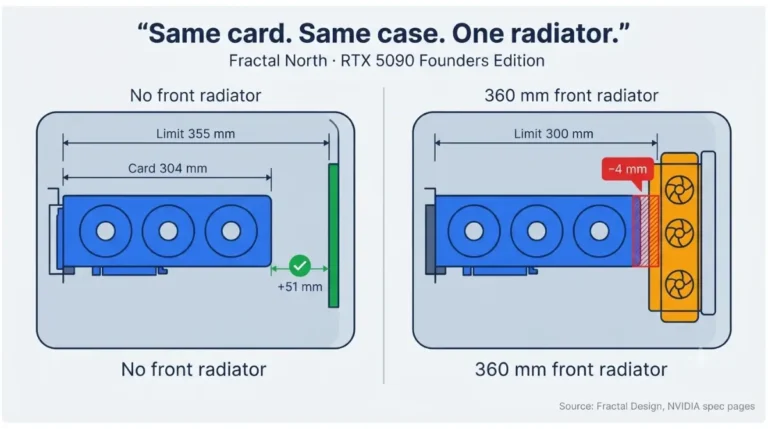
GPU case fit for three current cards in four cases, including a 304 mm RTX 5090 Founders Edition that misses a radiator-equipped North by 4 mm.
 ByRenuka Komre
Last Updated:
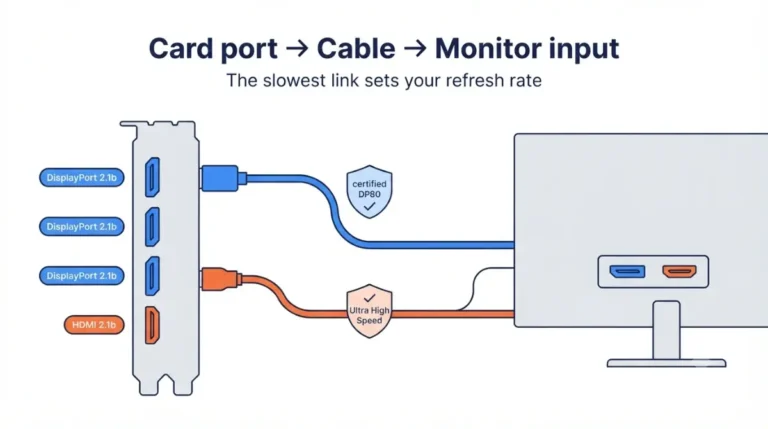
Port choice on the graphics card can change the top mode: Intel lists the Arc B580 with one DisplayPort up to UHBR 13.5 and two up to UHBR 10.
 ByRenuka Komre
Last Updated:
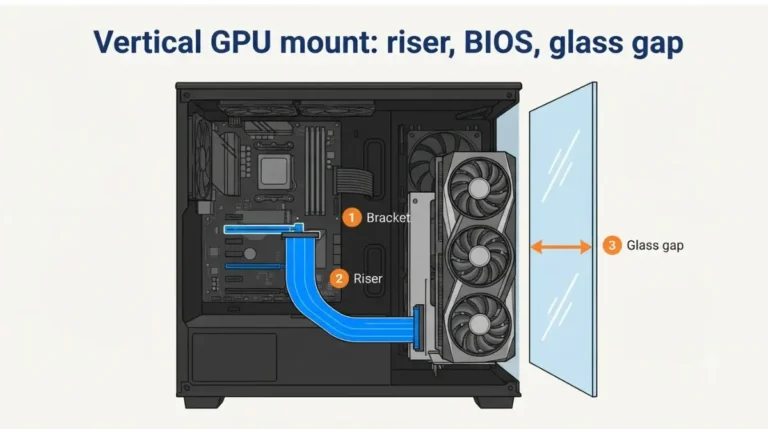
Vertical GPU kits are rated in slots of 20.32 mm each. Compare your card’s thickness with the kit, then with a case limit such as the HYTE Y70’s 105 mm.
 ByRenuka Komre
Last Updated:
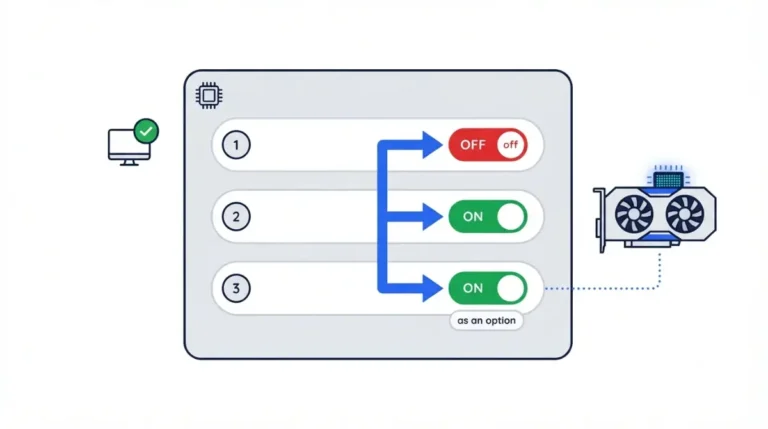
Resizable BAR stays hidden until Above 4G Decoding is on. Menu paths for ASUS, MSI, Gigabyte and ASRock boards, and where GPU-Z shows it working.
 ByRenuka Komre
Last Updated:
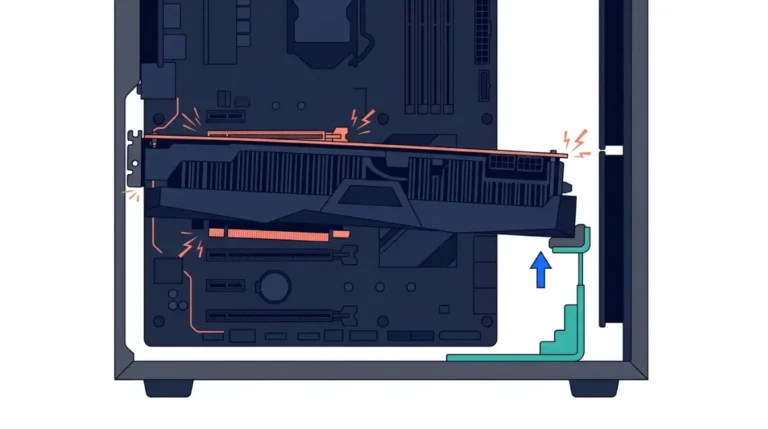
A GPU support bracket only helps if it fits: NVIDIA’s RTX 5090 Founders Edition is 2-slot, ASUS’s ROG Astral 3.8-slot. Here’s how to check yours.
 ByRenuka Komre
Last Updated:
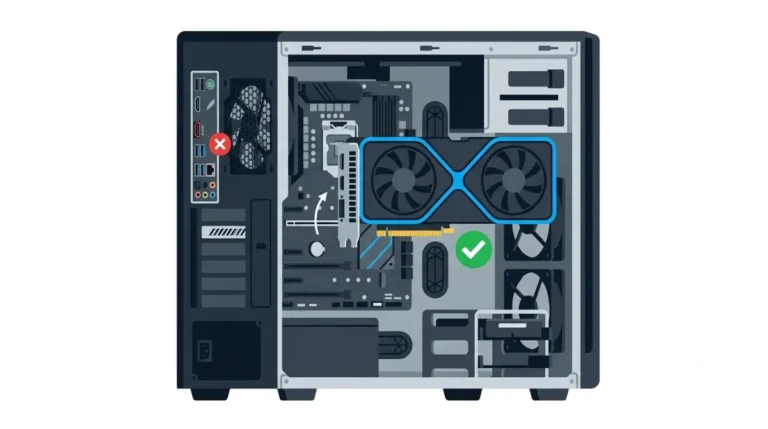
Installing a GPU starts at the primary x16 slot, closest to the CPU. Expect Microsoft’s basic display driver on first boot until the maker’s driver is in.
 ByRenuka Komre
Last Updated:
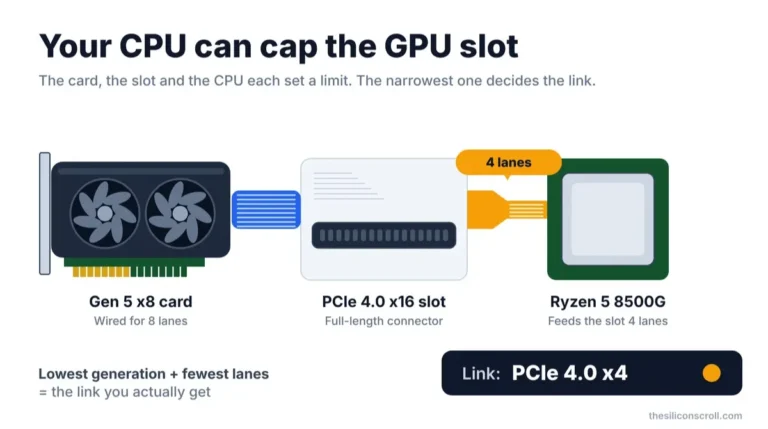
GPU compatibility on older boards: an RTX 5060 in a PCIe 4.0 slot runs at PCIe 4.0 x8, and Radeon RX 9000 cards officially support UEFI boot only.